What You Need to Know About Contributory Negligence
After a car wreck, one of the first questions people ask is:
What if I was partly at fault?
In many states, that doesn’t prevent recovery. Your compensation may just be reduced.
But in Alabama, personal injury cases are handled differently and are much stricter. Even a small amount of fault can change everything.
What Is Contributory Negligence?
Alabama follows a legal rule called Contributory Negligence.
Under this rule:
If you are found to be even 1% at fault, you may be prevented from recovering any damages.
Not 50%.
Not 20%.
Just 1%.
That makes Alabama one of only five extremely unforgiving states when it comes to fault.
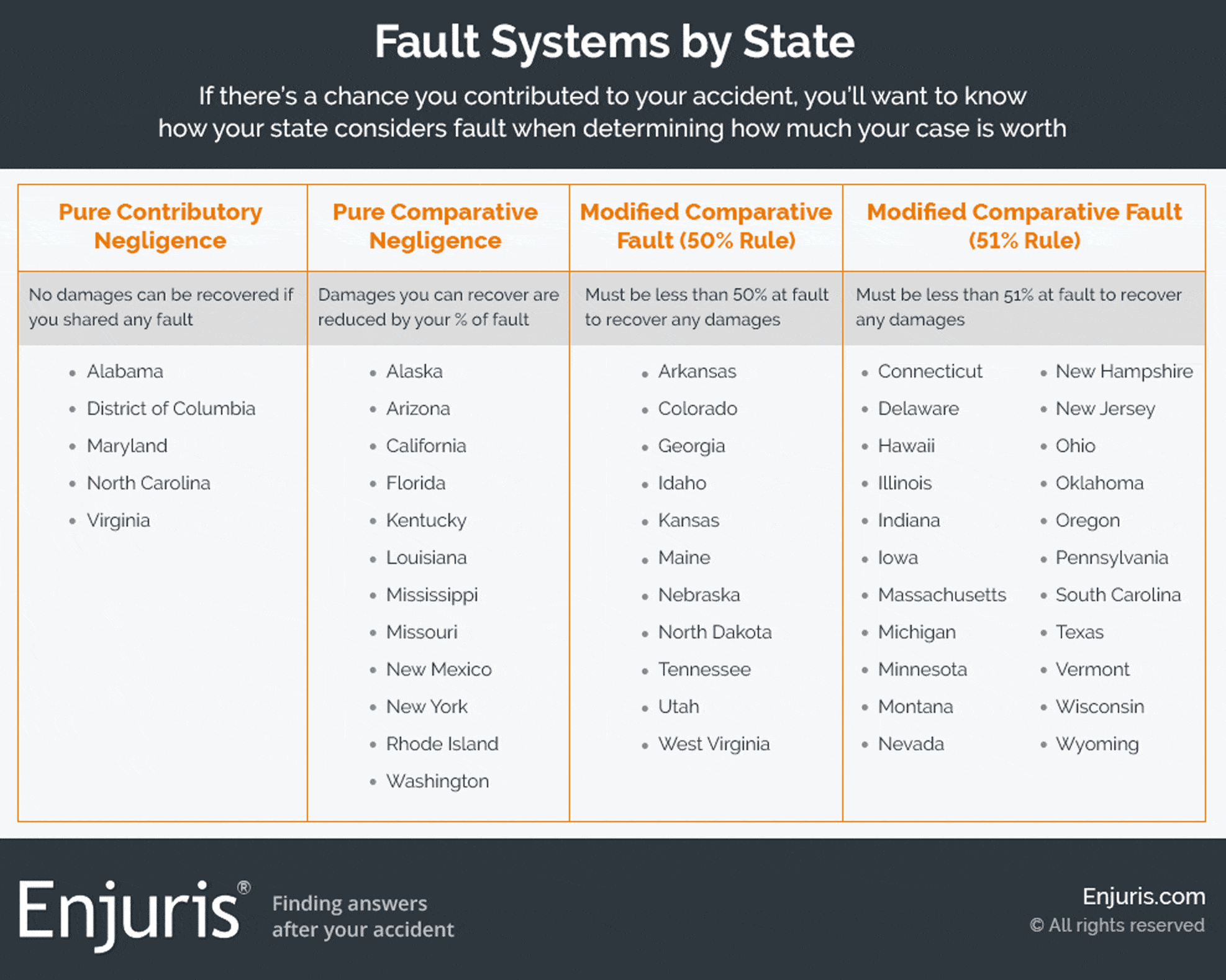
Comparative Negligence, Contributory Negligence, and Determining Fault
What “1% at Fault” Can Look Like in Real Life
This doesn’t just apply to obvious mistakes.
It can come down to small details, such as:
- Driving slightly over the speed limit
- Not braking as quickly as expected
- Being momentarily distracted
- Failing to anticipate another driver’s actions
Individually, these may seem minor. But in a claim or courtroom, they can be used to argue that you share responsibility, even in a small way. Under Alabama law, that can be enough to deny recovery entirely.
If you’re trying to determine where you stand, you can start here.
How Insurance Companies Use This Rule
Insurance companies are very aware of how powerful contributory negligence is, and they are trained to evaluate claims in ways that minimize payout.
They don’t need to prove you were mostly at fault.
They only need to create a reasonable argument that you were partially at fault.
That’s why you may see:
- Close scrutiny of your statements
- Emphasis on small inconsistencies
- Attempts to reinterpret what happened
- Early questions designed to lock in your version of events
This ties directly into how claims are evaluated:
- Risk → Can fault be shifted, even slightly?
- Exposure → How much could the claim cost if they don’t?
- Preparation → Does the case look strong enough to challenge their position?
Even a small opening can change how the entire claim is handled.
Why Early Evidence Matters More in Alabama
Crash documentation and reconstruction can play a critical role in determining fault. Because the margin for error is so small, evidence becomes critical.
The difference between recovery and no recovery can come down to:
- Scene documentation
- Witness statements
- Vehicle damage analysis
- Timing and consistency of medical treatment
If those pieces aren’t gathered or preserved early, it becomes easier for the narrative to shift.
And once that happens, it’s difficult to reverse.
How Local Juries Can Influence Fault
Fault isn’t evaluated in a vacuum. If a case goes to trial, it’s decided by a jury, and jurors bring their own expectations and experiences into the courtroom.
In Northeast Alabama, those perspectives can influence:
- What is considered “reasonable” driving behavior
- How responsibility is assigned
- Whether a small mistake is seen as significant
Understanding how fault is viewed locally isn’t something that happens at the end of a case.
It has to be part of how the case is prepared from the beginning.
Why Trial Readiness Matters in These Cases
In a contributory negligence state, preparation isn’t optional—it’s central.
If a case appears unprepared:
- Insurance companies are more likely to push fault arguments
- Settlement offers may reflect increased risk to you
- Leverage shifts away from your side
On the other hand, when a case is clearly built with trial in mind:
- Arguments about fault can be challenged more effectively
- Evidence carries more weight
- The evaluation of the claim can change
Preparation shapes perception, and perception affects outcomes. See how our Alabama trial attorneys prepare cases from the very beginning.
How This Connects to What You Do After a Wreck
Many of the most important decisions happen early—often before you know how fault will be argued.
If you haven’t already, it’s important to understand the steps that help protect your case from the start:
What you do after a car wreck can directly affect how fault is evaluated later.
Final Thought
In Alabama, contributory negligence means the margin for error is small.
Very small.
Insurance companies are evaluating risk, exposure, and preparation from the beginning.
And when even 1% fault can determine the outcome, how a case is built matters more than most people realize. At Cusimano, Roberts, Mills & Knowlton, we:
- Know the rules
- Prepare cases for trial from the start
- Understand the local perspective and courts
- Stand by you throughout the claims and/or litigation processes
If you’re trying to navigate an Alabama car wreck or other injury, you can start here.
This content is for informational purposes only and does not constitute legal advice.